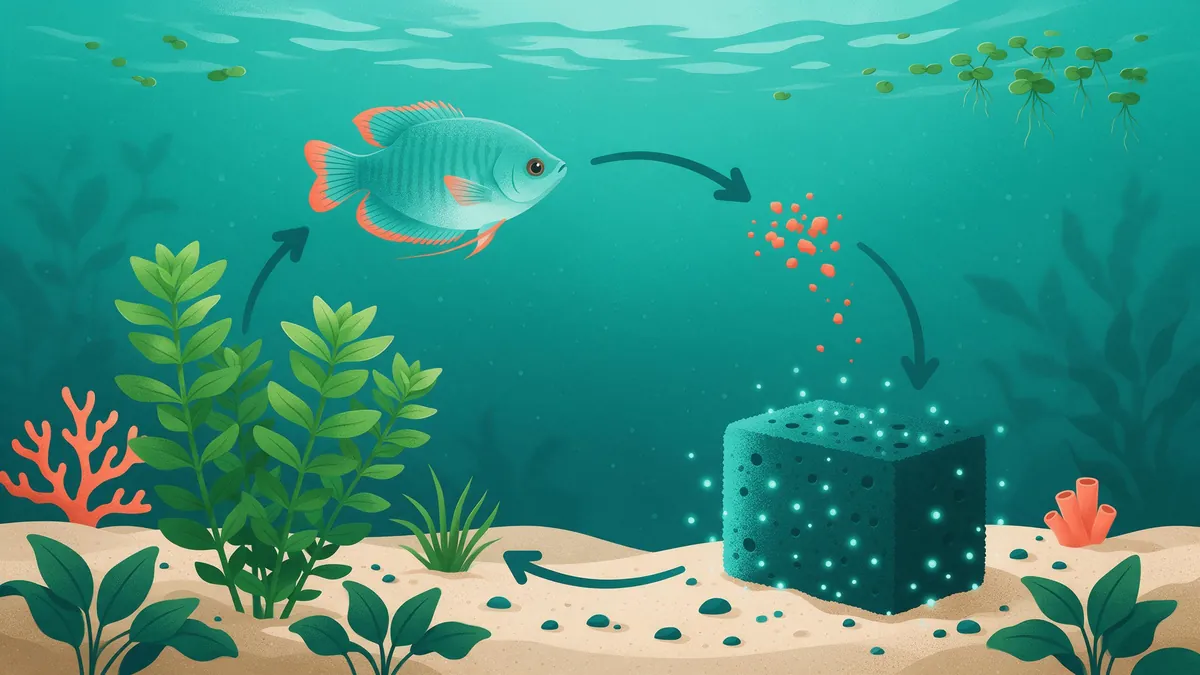
Fish waste and leftover food release ammonia, which burns fish gills. One group of bacteria turns ammonia into nitrite (also toxic); a second group turns nitrite into nitrate, which is far safer and removed with water changes. A new tank has neither group yet, so it has to grow them first.
Three chemicals, one chain
AmmoniaNH₃/NH₄⁺. From waste and food. Toxic from 0.25 ppm.
NitriteNO₂⁻. Made from ammonia. Also toxic from 0.25 ppm.
NitrateNO₃⁻. Made from nitrite. Keep under 20–40 ppm with water changes.
The five stages on your test kit
| Stage | Ammonia | Nitrite | Nitrate | What it means |
|---|---|---|---|---|
| 1. Not started | 0 | 0 | 0 | Nothing to eat yet |
| 2. Ammonia rising | up | 0 | 0 | First bacteria starting |
| 3. Nitrite spike | falling | up | 0–low | Halfway |
| 4. Nitrate appearing | low | falling | rising | Nearly done |
| 5. Cycled | 0 | 0 | present | Safe to add fish |
Drag the day slider on the home page chart to watch the three curves rise and fall.
Plan your tank's cycleOpen the calculator →Questions
Where do the bacteria live?
Mostly in the filter media, and on gravel and decor. That is why you rinse filter media in old tank water, never tap water, which has chlorine.
Does a cycled tank stay cycled?
As long as the bacteria are fed and not killed. Long power cuts, some medications, or replacing all the filter media at once can set it back.
General information, not veterinary advice. Updated November 2026.